The short answer
A useful introduction to everyday life and state control in East Germany. Museum entry is enough for a focused visit; the bus combination fits a broader sightseeing day.
Best forCold War history, everyday objects and interactive discovery
Time to allowAround 90 minutes in the exhibition; allow two hours including arrival
Plan at a glance
| Best for | Cold War history, everyday objects and interactive discovery |
|---|---|
| Time to allow | Around 90 minutes in the exhibition; allow two hours including arrival |
| Decide first | A useful introduction to everyday life and state control in East Germany. Museum entry is enough for a focused visit; the bus combination fits a broader sightseeing day. |
| Ticketory options list | Compare DDR Museum tickets |
A short history of the DDR Museum
The DDR Museum opened to visitors on 15 July 2006 as a privately funded museum on the banks of the Spree. Its subject is the former German Democratic Republic, approached through the routines, possessions and political conditions that shaped everyday life. Original objects and reconstructed environments make that history tangible.
The institution continued to develop after its opening, including recovering from damage caused by the AquaDom collapse in 2022. A separate collection depot opened in Berlin-Marzahn in 2025, while the central museum marked its twentieth anniversary in 2026. This guide covers the permanent exhibition in Berlin-Mitte; a depot visit is a different outing.
Why visit the DDR Museum?
The museum is a good choice when you want to connect political history with ordinary life. Its exhibition covers subjects such as work, education, shopping and the Stasi’s surveillance. A household object or recreated room can make an unfamiliar period easier to understand, especially when you take time to read the explanation alongside it.
Our recommendation is to treat the interactive elements as starting points for discussion. With children, pause to explain what an object did and why it mattered. With adults, look for the relationship between private routines and public restrictions. A visit can be engaging without turning the history into nostalgia; the quieter reading stops are as valuable as the popular activities.
Tickets and entry options
The entry product includes access to the DDR Museum. The combination adds a 24-hour hop-on hop-off bus ticket, bus commentary in 13 languages, headphones and a route map. The audio commentary belongs to the bus experience; the museum itself does not offer an audio guide. Neither inclusion list establishes a live guided museum tour.
Choose entry alone if the exhibition is your main appointment and you are comfortable arranging transport. Choose the combination if you want to use the sightseeing bus for more of the city. Before buying, check when the bus pass activates, how the two tickets are redeemed and which museum date applies. A 24-hour ticket describes validity, not a bus service running through the night.
| Option | Includes | Know before booking |
|---|---|---|
| DDR Museum entry (opens in a new tab) | Admission to the museum’s interactive exhibition | No live guided tour or museum audio guide; check the selected visit date. |
| 24-hour sightseeing bus and DDR Museum (opens in a new tab) | Museum admission, 24-hour hop-on hop-off bus, bus audio commentary, headphones and route map | Bus service hours are separate from pass validity. Confirm activation and museum redemption instructions. |
Ticket prices and what to compare
Official reference admission checked on 14 October 2026 is €13.90 for adults and €8.50 for eligible concessions. Children under six enter free. Proof is required for reduced admission. These are the museum’s own rates, not a fixed quote for either Ticketory product or a price for the bus combination.
Compare the final checkout total for your date and party. For the combination, ask whether you will actually use the bus enough to justify the extra cost. Do not assume that the Berlin Museum Pass includes this privately funded museum; the museum confirms that it does not participate in that pass. Check the terms of any other city card separately.
Opening hours
The DDR Museum normally opens daily 09:00–21:00, including public holidays. On 24 and 31 December it closes at 16:00. Recheck the selected date before arranging your day, particularly when combining museum admission with a bus itinerary.
Give yourself useful exhibition time before closing. The museum advises arriving by 20:00 at the latest for a normal evening visit, although the door remains open until closing. Our preference is to leave a larger margin if you enjoy reading labels or expect to spend time at interactive displays.
How to get there
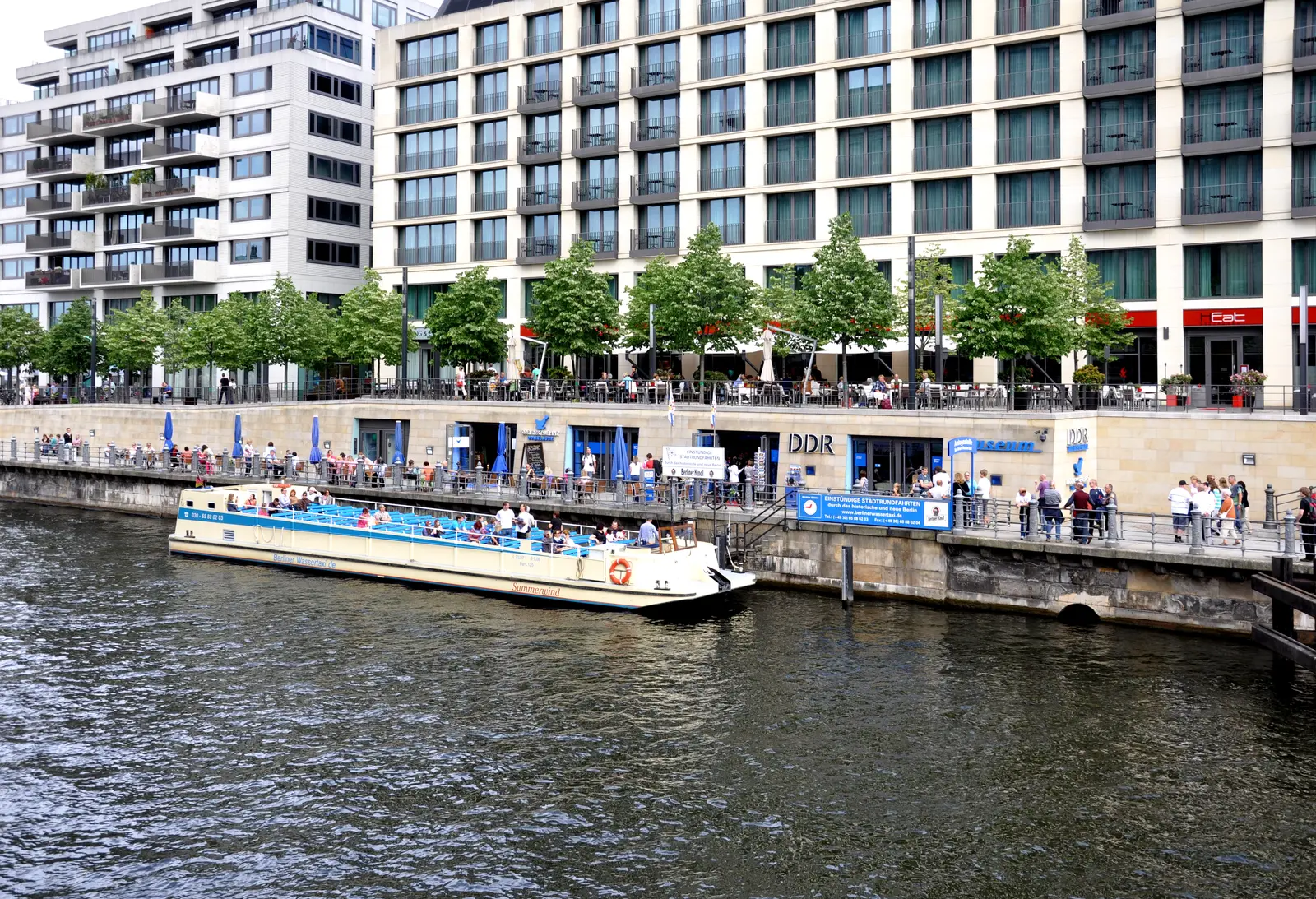
The address is Karl-Liebknecht-Str. 1, 10178 Berlin, opposite Berlin Cathedral. The entrance is down at river level on Vera-Brittain-Ufer, so do not assume that a street-level pin marks the door. From the Liebknechtbrücke, follow the approach to the Spree promenade and look for the museum entrance.
Useful stations include U5 Museumsinsel or Rotes Rathaus, and S-Bahn Hackescher Markt or Alexanderplatz. Use a current journey planner for your exact connection. If you book the bus combination, check the operator’s stop map and the walking connection to the museum rather than assuming a stop is directly outside.
The exhibition is accessible from its main entrance, but reaching the promenade involves stairs or a very steep ramp. Contact the museum before travelling if that approach could be difficult. Access inside and access to the riverside entrance are separate planning questions.
Highlights to look for
The original Trabant P601 with its driving simulation is a memorable introduction to mobility and everyday ambition. The reconstructed prefabricated flat rewards a slower look at furnishings and domestic objects. Exhibition texts are in German and English, making it possible to follow the stories independently.
Spend time with the displays on surveillance and ideology as well as domestic life. Their context helps prevent the familiar-looking objects from becoming detached souvenirs of the period. Notice which details feel ordinary and which reveal the influence of the state, then bring those observations into the next themed area.
Interactive activities can be popular, so our suggestion is to move to another display when one is occupied and return later. You do not need to try every installation to gain something from the visit. Let one or two objects that interest you set the pace.
Practical tips before you go
Bring a small bag and keep your ticket easy to present. Suitcases and travel bags are not permitted in the exhibition. Handle the interactive objects carefully, follow staff instructions and give other visitors room to use the displays. Food and drink must stay outside the exhibition rooms.
Private photography is allowed under the museum’s rules. Commercial photography needs prior permission. A busy interactive room also calls for patience: avoid blocking an installation for repeated pictures and put the experience of the people around you first.
Plan a meal or snack outside the museum before a long sightseeing day. With young children, alternate reading stops with activities and keep the rest of the afternoon flexible. For the bus combination, save both redemption instructions and the current timetable offline so that a connection or phone signal does not dictate the day.
Average time to allow
The museum reports that visitors typically need about 90 minutes for the exhibition. Our planning suggestion is roughly two hours including finding the riverside entrance and a short pause afterwards. Allow longer if you want to read extensively or spend more time at the interactive installations.
For the bus combination, reserve a separate block for the museum rather than treating it as a quick stop between departures. The bus pass’s 24-hour validity is not a recommended museum duration. Avoid planning the final museum entry around the last bus of the day without checking both schedules.
Winter visiting tips
Use the museum as an indoor appointment between outdoor parts of a Berlin day. Wear shoes with a good grip for the approach to the riverside and leave extra time if the route is wet or icy. Keep layers easy to carry and avoid arriving directly from a train journey with a large suitcase.
For 24 or 31 December, work backwards from the 16:00 closing time and leave the bus tour flexible. On other winter dates, an evening museum visit can free the daylight hours for city walks, but check the bus’s seasonal operating hours first. A valid combination ticket does not extend either attraction’s opening schedule.
DDR Museum: planning questions
What should I check before choosing DDR Museum?
The entry product includes access to the DDR Museum. The combination adds a 24-hour hop-on hop-off bus ticket, bus commentary in 13 languages, headphones and a route map. The audio commentary belongs to the bus experience; the museum itself does not offer an audio guide. Neither inclusion list establishes a live guided museum tour. Choose entry alone if the exhibition is your main appointment and you are comfortable arranging transport. Choose the combination if you want to use the sightseeing bus for more of the city. Before buying, check when the bus pass activates, how the two tickets are redeemed and which museum date applies. A 24-hour ticket describes validity, not a bus service running through the night.
How much time should I allow for DDR Museum?
The museum reports that visitors typically need about 90 minutes for the exhibition. Our planning suggestion is roughly two hours including finding the riverside entrance and a short pause afterwards. Allow longer if you want to read extensively or spend more time at the interactive installations. For the bus combination, reserve a separate block for the museum rather than treating it as a quick stop between departures. The bus pass’s 24-hour validity is not a recommended museum duration. Avoid planning the final museum entry around the last bus of the day without checking both schedules.
How should I plan the journey to DDR Museum?
The address is Karl-Liebknecht-Str. 1, 10178 Berlin, opposite Berlin Cathedral. The entrance is down at river level on Vera-Brittain-Ufer, so do not assume that a street-level pin marks the door. From the Liebknechtbrücke, follow the approach to the Spree promenade and look for the museum entrance. Useful stations include U5 Museumsinsel or Rotes Rathaus, and S-Bahn Hackescher Markt or Alexanderplatz. Use a current journey planner for your exact connection. If you book the bus combination, check the operator’s stop map and the walking connection to the museum rather than assuming a stop is directly outside. The exhibition is accessible from its main entrance, but reaching the promenade involves stairs or a very steep ramp. Contact the museum before travelling if that approach could be difficult. Access inside and access to the riverside entrance are separate planning questions.
Practical details can change. Check your selected Ticketory booking for current prices, opening arrangements, accessibility and entry instructions. Suggested timings and routes are our planning advice, not a guaranteed schedule.
Our editorial approach