The short answer
Choose by itinerary and guiding format, then check the meeting point and visitor-area access.
Best forArchitecture, Byzantine mosaics and Istanbul’s layered religious history
Time to allowOur suggestion: 60–90 minutes for the gallery, plus queues; longer for packages
Plan at a glance
| Best for | Architecture, Byzantine mosaics and Istanbul’s layered religious history |
|---|---|
| Time to allow | Our suggestion: 60–90 minutes for the gallery, plus queues; longer for packages |
| Decide first | Choose by itinerary and guiding format, then check the meeting point and visitor-area access. |
| Ticketory options list | Hagia Sophia ticket options |
History: a monument with several lives
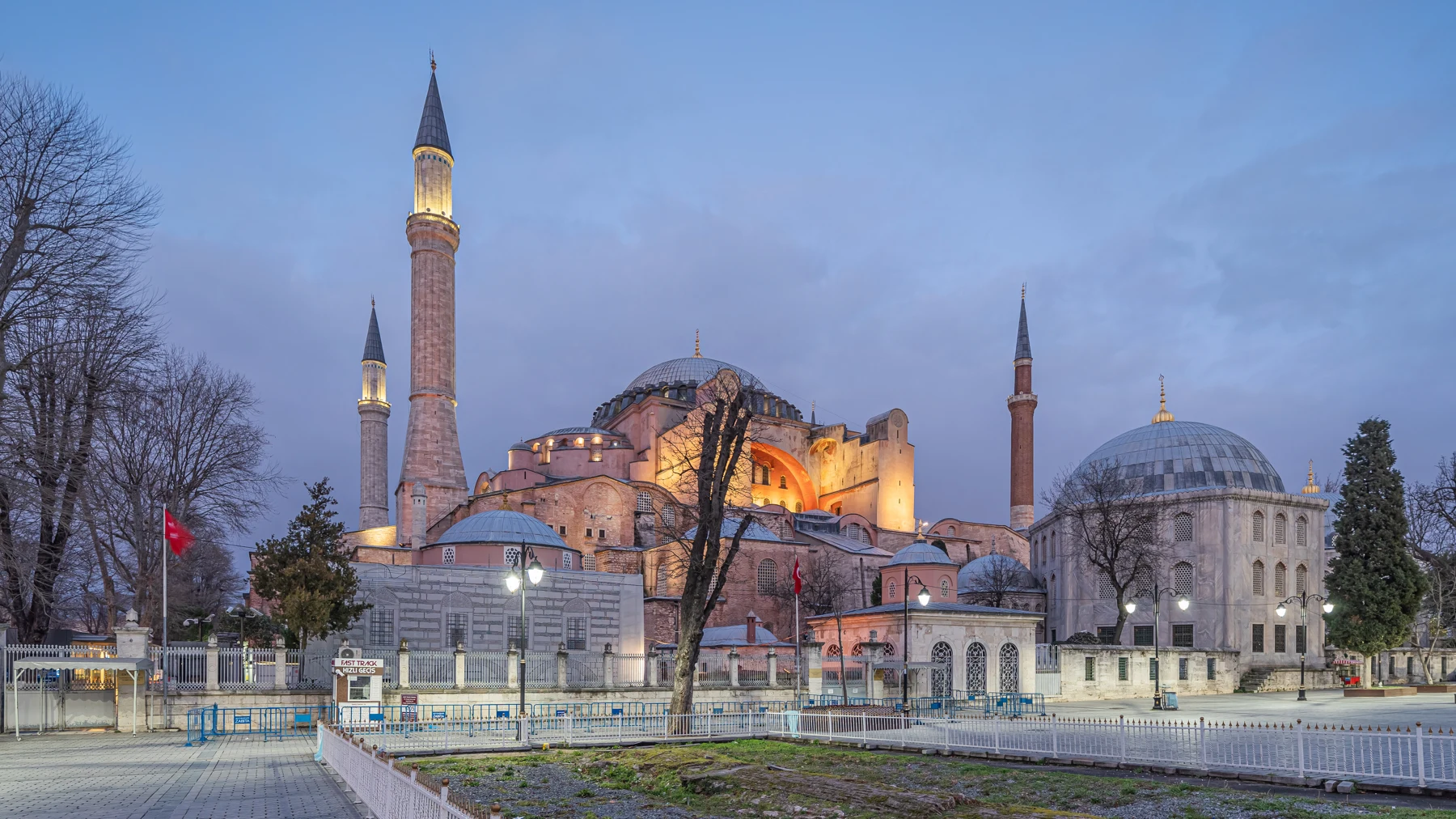
The present building opened in 537 under Emperor Justinian I. Its later uses as a mosque and museum explain why Byzantine mosaics and Ottoman additions share the same architectural setting. It returned to mosque use in 2020.
Read the building as a sequence of changes, rather than expecting a conventional museum arranged into galleries of labelled objects.
Why visit Hagia Sophia?
This is a strong choice if the relationship between scale, light and structure interests you. Looking across the interior is part of the experience; leave time to pause instead of treating each decorative detail as a photograph to collect.
The tourist route uses the upper gallery, separated from worship below. A sightseeing ticket should not be read as unrestricted access to the prayer floor.
Tickets and entry options: city landmarks or a cruise?
The checked cruise package lists a one-hour Old City and Hagia Sophia guided component, admission, an audio/augmented-reality app and a two-hour Bosphorus cruise. It excludes a live guide on the boat and does not bypass security.
The three-landmark package covers Hagia Sophia, the Basilica Cistern and the Blue Mosque. Its detailed instructions specify live explanation outside Hagia Sophia and audio inside. Blue Mosque admission itself is free; the paid package supplies guiding and the other included entries.
Our recommendation: choose the cruise if you want a change of scenery after the monument. Choose the three-site route if you want an organised historical walk. Avoid buying both without checking overlapping admission.
- Hagia Sophia tour and Bosphorus cruise (opens in a new tab)
- three-landmark combination (opens in a new tab)
Does skip-the-line mean no waiting?
No. Security remains compulsory, and the operator says visitors share the entry queue even with prepaid QR tickets.
Is the History and Experience Museum the same visit?
No. Check the exact inclusions: do not assume a mosque-gallery ticket also includes the separate History and Experience Museum.
Ticket price: compare the whole package
Check Ticketory for the total on your selected date and for each traveller. Compare admission, guiding, cruise transport and cancellation conditions together; a headline amount alone does not tell you whether two products offer the same experience.
Do not assume a child’s free venue admission also makes a guided package free. Confirm the product’s age categories and required identification before paying.
Opening hours and Friday prayer
DEM Museums publishes visitor-area access from 09:00 to 19:00 and a Friday prayer closure from 12:30 to 14:30. Reconfirm arrangements for your date and use your tour’s assigned meeting time when booking a package.
Keep a gap before the next reservation. A tour start, admission window and building closing time are different constraints; arriving before closing does not guarantee time for an unhurried visit.
How to get there: use the correct meeting point
Hagia Sophia is in Sultanahmet. For a guided product, navigate to the voucher meeting point first instead of joining the monument’s entrance queue. The checked cruise package lists No. 10 At Meydanı Caddesi; the three-site combination lists Dsign Cafe on At Meydanı Caddesi.
Save the meeting pin and arrival instructions offline. If you are combining this with a palace visit, check the walking route and leave room for security delays rather than booking consecutive start times.
Highlights: what to focus on
Look for the contrast between the vast central space and the finer mosaic details along the visitor route. The Ministry describes gallery access that overlooks the sanctuary and passes the Marble Door and Byzantine mosaics.
Treat the published route as a guide to the visit, not a promise that every historic feature will be visible. Restoration, protective screens and operational restrictions can affect the view.
Tips before you arrive
Bring headphones and a charged phone for the audio experience. Dress for a working mosque: women need a head covering, and all visitors must meet the clothing rules. Carry what you need rather than assuming the tour includes covers.
If steps, slopes or standing are difficult, ask for current access arrangements before purchasing. Keep voices low and avoid photographing people at prayer.
- Download any supplied audio before leaving your accommodation.
- Check where the live-guided part ends and the independent visit begins.
- Keep the admission QR separate from any order receipt.
Average time: leave space around the visit
Our planning suggestion is 60–90 minutes for an independent gallery visit, with entry waiting added separately. This is an editorial allowance, not a guaranteed tour duration.
Packages need a larger part of the day. Confirm the full sequence, cruise departure and transfer time before adding another timed attraction. The three-site listing contains differing duration descriptions, so rely on the final itinerary supplied for your booking.
Winter tips: plan the outdoor parts too
For a winter itinerary, remember that an indoor monument can still involve outdoor waiting and walking between meeting points. Bring an easily removable layer and shoes suited to wet paving.
If choosing the cruise, check sailing arrangements close to departure and leave flexibility for weather-related changes. Keep your essential monument visit separate from plans that depend on spending a long time on deck.
Hagia Sophia: planning questions
What should I check before choosing Hagia Sophia?
The checked cruise package lists a one-hour Old City and Hagia Sophia guided component, admission, an audio/augmented-reality app and a two-hour Bosphorus cruise. It excludes a live guide on the boat and does not bypass security. The three-landmark package covers Hagia Sophia, the Basilica Cistern and the Blue Mosque. Its detailed instructions specify live explanation outside Hagia Sophia and audio inside. Blue Mosque admission itself is free; the paid package supplies guiding and the other included entries. Our recommendation: choose the cruise if you want a change of scenery after the monument. Choose the three-site route if you want an organised historical walk. Avoid buying both without checking overlapping admission.
How much time should I allow for Hagia Sophia?
Our planning suggestion is 60–90 minutes for an independent gallery visit, with entry waiting added separately. This is an editorial allowance, not a guaranteed tour duration. Packages need a larger part of the day. Confirm the full sequence, cruise departure and transfer time before adding another timed attraction. The three-site listing contains differing duration descriptions, so rely on the final itinerary supplied for your booking.
How should I plan the journey to Hagia Sophia?
Hagia Sophia is in Sultanahmet. For a guided product, navigate to the voucher meeting point first instead of joining the monument’s entrance queue. The checked cruise package lists No. 10 At Meydanı Caddesi; the three-site combination lists Dsign Cafe on At Meydanı Caddesi. Save the meeting pin and arrival instructions offline. If you are combining this with a palace visit, check the walking route and leave room for security delays rather than booking consecutive start times.
Practical details can change. Check your selected Ticketory booking for current prices, opening arrangements, accessibility and entry instructions. Suggested timings and routes are our planning advice, not a guaranteed schedule.
Our editorial approach