The short answer
A rewarding half-day for wildlife-focused visitors who enjoy an outdoor route and leave room for animals to set the pace.
Best forFamilies, wildlife enthusiasts and visitors interested in Northwest conservation
Time to allow3–4 hours, plus transport and arrival time
Plan at a glance
| Best for | Families, wildlife enthusiasts and visitors interested in Northwest conservation |
|---|---|
| Time to allow | 3–4 hours, plus transport and arrival time |
| Decide first | A rewarding half-day for wildlife-focused visitors who enjoy an outdoor route and leave room for animals to set the pace. |
| Ticketory options list | Check Woodland Park Zoo tickets on Ticketory |
History
Founded in 1899, Woodland Park Zoo developed from parkland associated with Guy Phinney’s estate and an early collection of animals. The Olmsted Brothers helped shape the public park, retaining gardens and arranging pathways and open spaces. Its setting remains part of the experience: the landscape connects your journey between exhibits rather than simply filling the gaps.
A major change came with the 1976 master plan, which reorganised the zoo around natural habitats and ecological relationships. Later additions continued that approach. Today, the conservation work presented in areas such as Living Northwest Trail and Forest Trailhead gives the visit a broader purpose than identifying the animals in front of you.
Why visit Woodland Park Zoo
The strongest reason to visit is the opportunity to spend unhurried time looking closely. Choose two or three priorities, then allow yourself to linger when an animal appears or a behaviour catches your attention. That usually makes a more satisfying day than racing around the grounds to complete a species list.
Living Northwest Trail is especially relevant to a Seattle trip because it links regional wildlife with local conservation. Forest Trailhead adds a different perspective through forest habitats and an elevated canopy route. Read the interpretation as well as looking through the viewing windows; the connections between habitat, human choices and wildlife are part of what makes these areas interesting.
Tickets & entry options
Ticketory offers a Woodland Park Zoo admission product. Its listed activities include keeper talks, the Family Farm contact area and a seasonal ambassador-animal programme. Check the day’s programme when you arrive: admission does not promise that every activity will operate or that every animal will be visible.
Treat zoo admission and paid encounters as separate decisions. Giraffe Up-close, penguin feeding and the Rhino Encounter are excluded from this product, as are food, souvenirs and separately ticketed events. The Butterfly Garden’s 2026 season ended on 7 September, so leave it out of an October or winter itinerary; check any separate charge when its seasonal programme returns.
| Option | Includes | Know before booking |
|---|---|---|
| Woodland Park Zoo admission (opens in a new tab) | Zoo entry and listed daytime programmes when operating. | Paid encounters, food, souvenirs and special events excluded. Seasonal activities depend on their own schedules; entry procedures and queues still apply. |
Ticket price
There is no single year-round admission figure to use for every visit. The zoo uses flexible pricing by date and season, while Ticketory’s final amount depends on the selected date and visitor category. Compare the complete booking total, currency and conditions before paying, rather than relying on a starting price.
Allow a separate budget for parking, meals and any additional experience. The zoo’s own advance-purchase offers and concessions have their own rules; do not assume they automatically apply to a reseller booking. If an aide or another access arrangement is needed, settle that detail with the zoo before purchasing extra tickets.
Opening hours
For 8 September 2026 through 30 April 2027, the published regular hours are 09:30–16:00 daily. The next published summer period, 1 May through 6 September 2027, runs 09:30–18:00. Holidays and special events can change those hours, so recheck the calendar for your date.
Start early enough to enjoy your main areas before closing. A late arrival may leave too little time for a comfortable circuit even if your ticket permits entry. The current notices also list Australasia maintenance closures on 20 and 23 October 2026; keep the day’s route flexible around temporary work.
How to get there
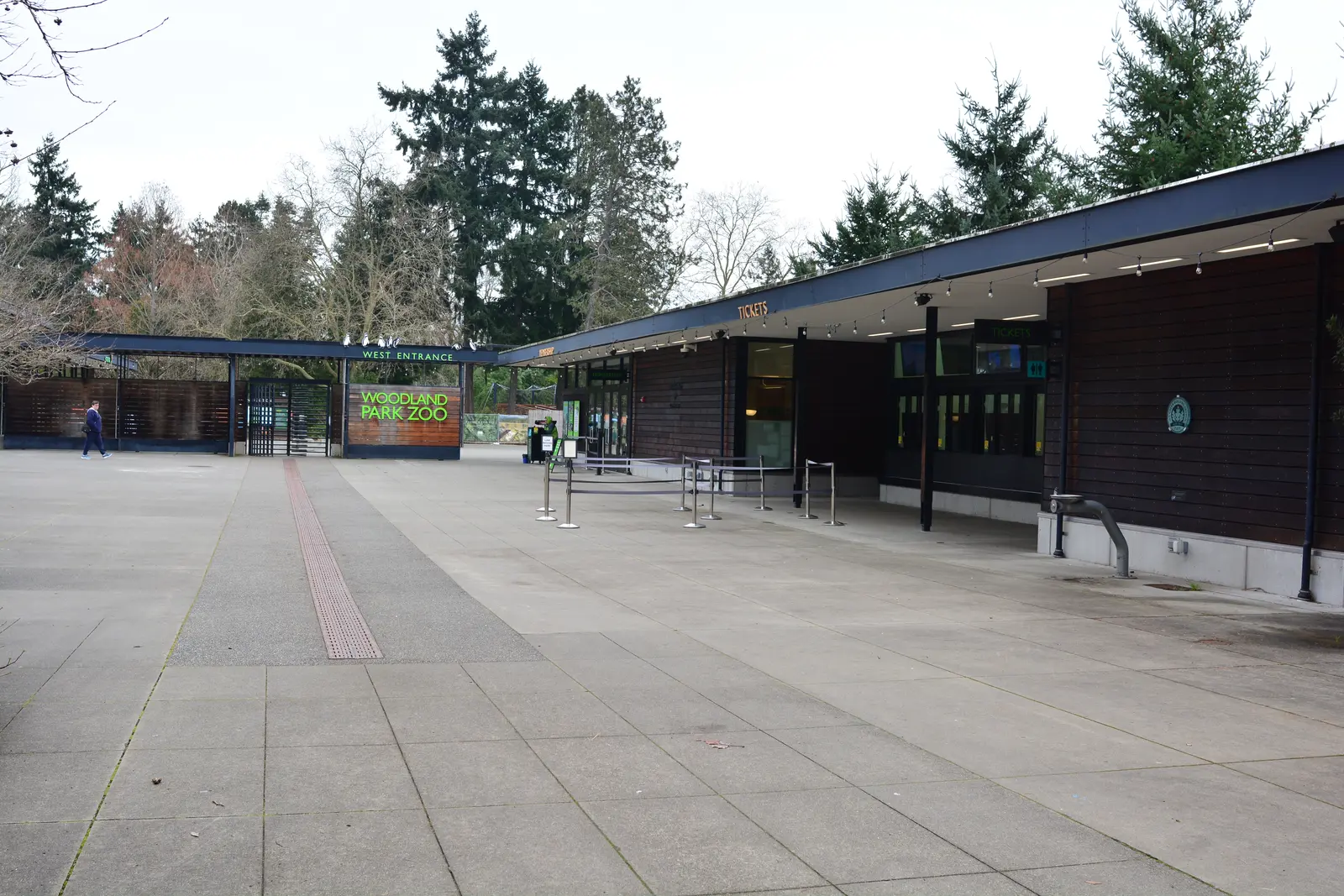
The West Entrance is at 5500 Phinney Avenue North, between North 55th and North 56th Streets. Metro bus 5 stops at Phinney Avenue North and North 55th Street for this entrance. The South Entrance is at 750 North 50th Street, near the African Savanna area. Choose the entrance before arranging your journey or drop-off.
Driving visitors can reach the west side from I-5 exit 169 via North 50th Street and Phinney Avenue North. Parking is charged separately, with rates varying by lot. Add enough time to find a space, pay and walk to the gate. For a return bus journey, check the current service rather than planning around a remembered timetable.
Highlights
Forest Trailhead is now open, with tree kangaroos, red pandas, kea and a Habitat Gallery featuring reptiles, amphibians and fish. Its accessible elevated path changes the viewing perspective. Leave a little time for the conservation displays instead of using the canopy route only as a shortcut.
Living Northwest Trail brings together regional species such as lynx, wolves, otters and brown bears, alongside work helping endangered western pond turtles. The Humboldt penguin habitat has underwater viewing and interprets a rocky coastal environment. Pick a few of these areas as anchors, then make discoveries between them; animal visibility varies naturally.
Tips for your visit
Download your ticket and consult the map before setting off. Keep footwear comfortable and carry what you need for changing weather. Outside food and non-alcoholic drinks are permitted, with restrictions including disposable straws and lids. Keep viewing areas quiet, stay on marked paths and never feed animals or tap the glass.
For access planning, use the zoo’s guide to trail conditions and sensory features. Wheelchairs and mobility scooters are available to rent subject to availability. Fully trained service animals require check-in, while pets are not permitted. Children aged 12 and under need a responsible adult throughout the visit. Agree a meeting place with your group before splitting up.
Average time
The zoo recommends at least two hours for an overview. For a first visit, allow around three to four hours as a practical planning estimate, with extra room for a meal, programmes or slower walking. Decide what matters most before beginning, rather than dividing your time equally between every area.
Keep your next timed reservation comfortably separated from the zoo visit. The journey back to central Seattle and the walk out of the grounds both belong in your schedule. A shorter visit can still work if you focus on a few areas and accept that the rest will wait for another day.
Winter tips
Build a winter visit around the 16:00 closing time and arrive in the morning if you want a generous route. Bring a waterproof outer layer and shoes suited to wet paths, and alternate outdoor viewing with available indoor areas. Allow the forecast to change your priorities rather than forcing a long circuit in uncomfortable conditions.
The Butterfly Garden is seasonal, so leave it out of a winter plan. WildLanterns is a separate event with its own ticket; daytime zoo admission does not cover it. Before travelling during holidays or rough weather, check the zoo’s current opening notice and event calendar, then confirm your booking instructions.
Woodland Park Zoo: planning questions
What should I check before choosing Woodland Park Zoo?
Ticketory offers a Woodland Park Zoo admission product. Its listed activities include keeper talks, the Family Farm contact area and a seasonal ambassador-animal programme. Check the day’s programme when you arrive: admission does not promise that every activity will operate or that every animal will be visible. Treat zoo admission and paid encounters as separate decisions. Giraffe Up-close, penguin feeding and the Rhino Encounter are excluded from this product, as are food, souvenirs and separately ticketed events. The Butterfly Garden’s 2026 season ended on 7 September, so leave it out of an October or winter itinerary; check any separate charge when its seasonal programme returns.
How much time should I allow for Woodland Park Zoo?
The zoo recommends at least two hours for an overview. For a first visit, allow around three to four hours as a practical planning estimate, with extra room for a meal, programmes or slower walking. Decide what matters most before beginning, rather than dividing your time equally between every area. Keep your next timed reservation comfortably separated from the zoo visit. The journey back to central Seattle and the walk out of the grounds both belong in your schedule. A shorter visit can still work if you focus on a few areas and accept that the rest will wait for another day.
How should I plan the journey to Woodland Park Zoo?
The West Entrance is at 5500 Phinney Avenue North, between North 55th and North 56th Streets. Metro bus 5 stops at Phinney Avenue North and North 55th Street for this entrance. The South Entrance is at 750 North 50th Street, near the African Savanna area. Choose the entrance before arranging your journey or drop-off. Driving visitors can reach the west side from I-5 exit 169 via North 50th Street and Phinney Avenue North. Parking is charged separately, with rates varying by lot. Add enough time to find a space, pay and walk to the gate. For a return bus journey, check the current service rather than planning around a remembered timetable.
Practical details can change. Check your selected Ticketory booking for current prices, opening arrangements, accessibility and entry instructions. Suggested timings and routes are our planning advice, not a guaranteed schedule.
Our editorial approach