The short answer
Choose ordinary entry for an independent visit; check your date, child eligibility and any separate extras before paying.
Best forSwedish social history, families and unhurried outdoor exploring
Time to allowOur suggestion: 3–4 hours; longer with children or a meal
Plan at a glance
| Best for | Swedish social history, families and unhurried outdoor exploring |
|---|---|
| Time to allow | Our suggestion: 3–4 hours; longer with children or a meal |
| Decide first | Choose ordinary entry for an independent visit; check your date, child eligibility and any separate extras before paying. |
| Ticketory options list | Compare Skansen tickets |
A short history of Skansen
Artur Hazelius, a teacher and linguist, founded Skansen on 11 October 1891. As industrialisation transformed Sweden, he wanted to preserve buildings, skills and ways of living that were disappearing. Moving historic houses into a shared landscape made that everyday heritage tangible rather than leaving it only in written records.
The museum developed from displays into a more active presentation of the past, with people demonstrating traditional work. Its Christmas market began in 1903, while Lill-Skansen followed in 1955. Skansen became an independent foundation in 1963, separating from the Nordic Museum.
Why visit Skansen?
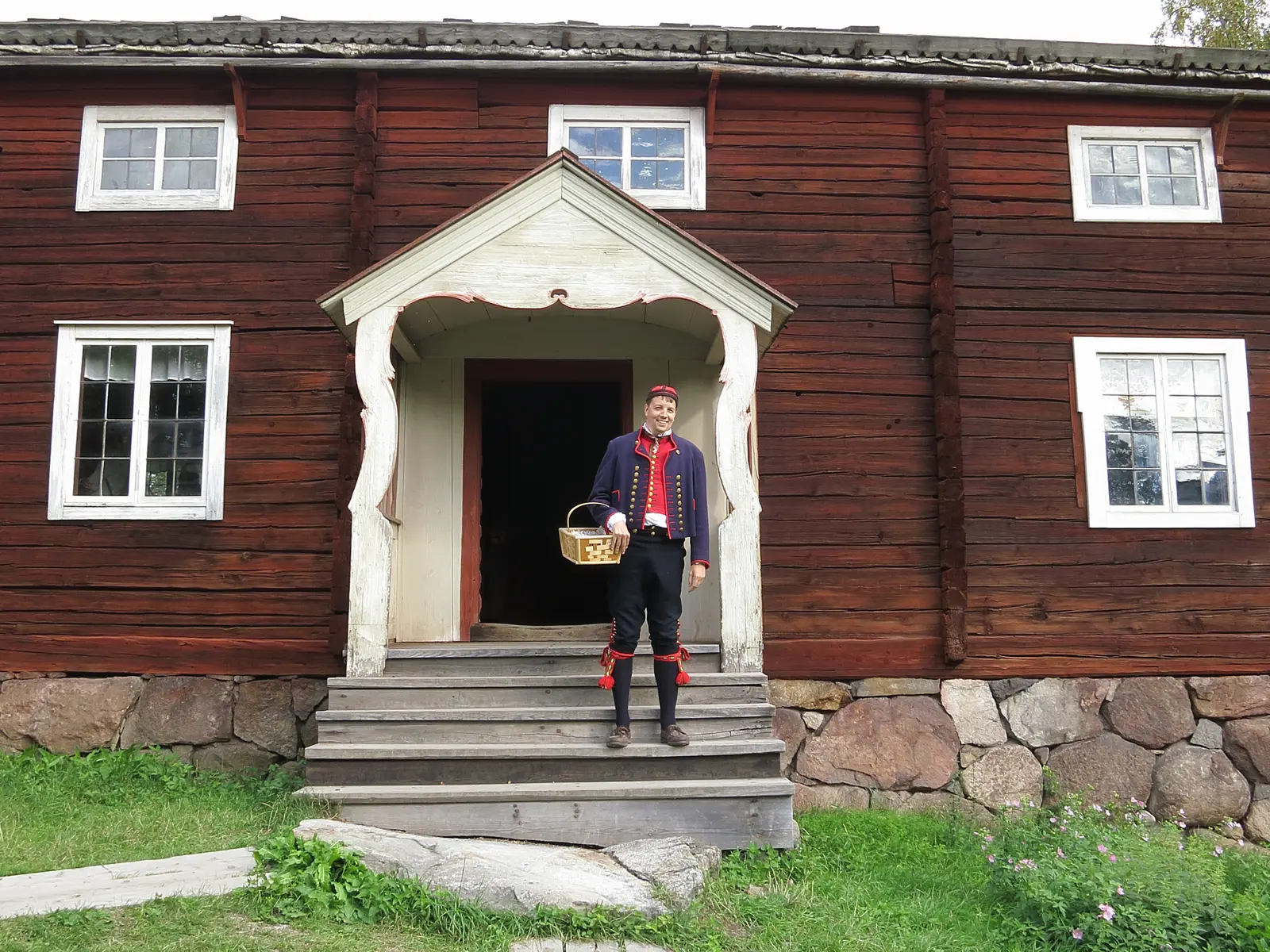
Choose Skansen if you enjoy understanding how people lived: the scale of a farmstead, the relationship between a workshop and its street, or the details that make a house feel inhabited. The open-air setting gives those connections room to breathe. You can alternate close observation with a longer walk rather than move continuously from label to label.
Families can build a varied day around history and animals, while adults interested in architecture may prefer fewer stops with more attention to individual buildings. It is less suitable for someone seeking a compact, fully indoor attraction. On a wider Scandinavian trip, Copenhagen’s Tivoli offers a different kind of outdoor day, with its own seasonal calendar.
Ticket options and what they include
The two Ticketory listings below are independent-entry choices, not guided tours. Their titles differ, but do not assume that the Nordic Zoo wording creates a premium tier over standard Skansen admission. Compare the actual date, conditions and final total, and buy only one suitable entry ticket.
The explicitly described museum-and-zoo option excludes Skansen Aquarium, the funicular, storage boxes and pony rides. These are not an all-inclusive package. Keep your confirmation available and follow its entry instructions; neither option should be treated as a promise to bypass security.
| Option | Includes | Know before booking |
|---|---|---|
| Open-Air Museum Entry Ticket (opens in a new tab) | Admission to Skansen for a self-guided visit. | No live guide, transport or food and drinks. Check the selected date and terms. |
| Open-Air Museum and Nordic Zoo (opens in a new tab) | Admission to Skansen’s open-air museum and Nordic zoo. | Skansen Aquarium, funicular, storage and pony rides are extra; no guided tour included. |
Prices and free child admission
Reviewed on 11 October 2026: Skansen varies admission prices by season and date, and online admission can cost less than paying at the gate. Children aged 0–15 enter free but need a complimentary ticket; arrange that rather than automatically selecting a paid child category. Children under 13 must be accompanied by an adult.
Check the live adult total for your date before paying. Allow separately for optional extras, travel and meals, and compare cancellation terms as well as price. This guide does not quote a fixed Ticketory rate or imply that a displayed starting price applies to every visitor.
Opening hours and seasonal exceptions
For 28 September 2026–10 January 2027, the regular published hours are 10:00–15:00 on weekdays and 10:00–16:00 at weekends. The 24 October–1 November school holiday runs 10:00–16:00. Christmas-market dates, Christmas Eve and New Year have exceptions: check the official calendar for your exact day.
The park’s closing time does not mean every historic interior or activity operates throughout that window. Review the day’s programme before setting priorities, then visit anything with a short opening period first. An early arrival leaves more flexibility than a late-afternoon attempt to cover the whole site.
Getting to Skansen
The main entrance is at Djurgårdsslätten 49. Tram 7 runs from T-Centralen, while bus 67 serves the journey from Odenplan. Ferry 82 connects Slussen, Skeppsholmen and Djurgården; from Allmänna Gränd it is approximately 400 metres on foot. The ferry uses SL fares, so check the appropriate transport ticket separately from museum admission.
From Djurgårdsbron, allow roughly a 950-metre walk. Parking is limited and road access can be restricted, making public transport a practical first choice. If you have a timed plan afterwards, leave room for the walk back, waiting for a service and changing transport rather than estimating only the ride itself.
What to look for inside
Skansen’s approximately 190 historic buildings span the early 14th century to the 1950s. Look beyond the façades: the arrangement of homes, farm buildings and workshops helps explain everyday life across different periods. Gardens add another layer, from Skogaholm’s 18th-century kitchen garden to later allotments and town plots.
Choose a few buildings to examine closely, then balance them with the Nordic animal areas. Lill-Skansen and the Baltic Sea Science Center are included in ordinary entry. The latter should not be confused with the separately charged Skansen Aquarium. Your interests and the day’s openings should determine the route, not a need to tick off every corner.
Practical tips and accessibility
Use the interactive map or digital audio guide to orient yourself, and ask staff in open houses about the details that catch your attention. Bring a payment card: Skansen is cashless. Picnics belong in designated areas rather than beside historic houses or in the churchyard; check the map before settling down.
Expect hills, uneven surfaces and considerable walking. Some older buildings have limited accessibility, and the funicular is not recommended for wheelchair or mobility-scooter users because of evacuation arrangements. Contact Skansen about an appropriate route in advance; the hilltop Solliden entrance may be useful for an arranged drop-off. Do not assume that an accessible entrance makes every interior accessible.
How long to allow
Our planning recommendation is three to four hours for a first visit, with extra time for children, a meal or a strong interest in the buildings. This is an editorial allowance, not a fixed tour duration. In two hours, select one historic area and one other priority instead of trying to cover the entire park.
For a longer visit, plan a break before tiredness determines the route for you. Keep your next reservation flexible and leave time to reach the exit from the far side of the grounds. A smaller number of enjoyable stops is usually more rewarding than hurrying between distant areas just before closing.
Winter visiting advice
Treat a winter visit as an outdoor day with sheltered pauses, not an indoor museum outing. Wear layers, gloves and shoes with dependable grip; carry what you need to stay comfortable while standing still as well as walking. Aim to see your main outdoor priorities early and shorten the route if conditions make the hills tiring.
Seasonal events can be a reason to visit, but do not build an evening plan around ordinary daytime admission without checking the dated programme. Confirm both park hours and the availability of the specific houses or activities you want. Keep another sheltered Stockholm stop as a flexible alternative, rather than buying several tightly linked reservations.
Skansen: planning questions
What should I check before choosing Skansen?
The two Ticketory listings below are independent-entry choices, not guided tours. Their titles differ, but do not assume that the Nordic Zoo wording creates a premium tier over standard Skansen admission. Compare the actual date, conditions and final total, and buy only one suitable entry ticket. The explicitly described museum-and-zoo option excludes Skansen Aquarium, the funicular, storage boxes and pony rides. These are not an all-inclusive package. Keep your confirmation available and follow its entry instructions; neither option should be treated as a promise to bypass security.
How much time should I allow for Skansen?
Our planning recommendation is three to four hours for a first visit, with extra time for children, a meal or a strong interest in the buildings. This is an editorial allowance, not a fixed tour duration. In two hours, select one historic area and one other priority instead of trying to cover the entire park. For a longer visit, plan a break before tiredness determines the route for you. Keep your next reservation flexible and leave time to reach the exit from the far side of the grounds. A smaller number of enjoyable stops is usually more rewarding than hurrying between distant areas just before closing.
How should I plan the journey to Skansen?
The main entrance is at Djurgårdsslätten 49. Tram 7 runs from T-Centralen, while bus 67 serves the journey from Odenplan. Ferry 82 connects Slussen, Skeppsholmen and Djurgården; from Allmänna Gränd it is approximately 400 metres on foot. The ferry uses SL fares, so check the appropriate transport ticket separately from museum admission. From Djurgårdsbron, allow roughly a 950-metre walk. Parking is limited and road access can be restricted, making public transport a practical first choice. If you have a timed plan afterwards, leave room for the walk back, waiting for a service and changing transport rather than estimating only the ride itself.
Practical details can change. Check your selected Ticketory booking for current prices, opening arrangements, accessibility and entry instructions. Suggested timings and routes are our planning advice, not a guaranteed schedule.
Our editorial approach